Our Orthokeratology Lenses

Logo_PauneLens_3R_bleu

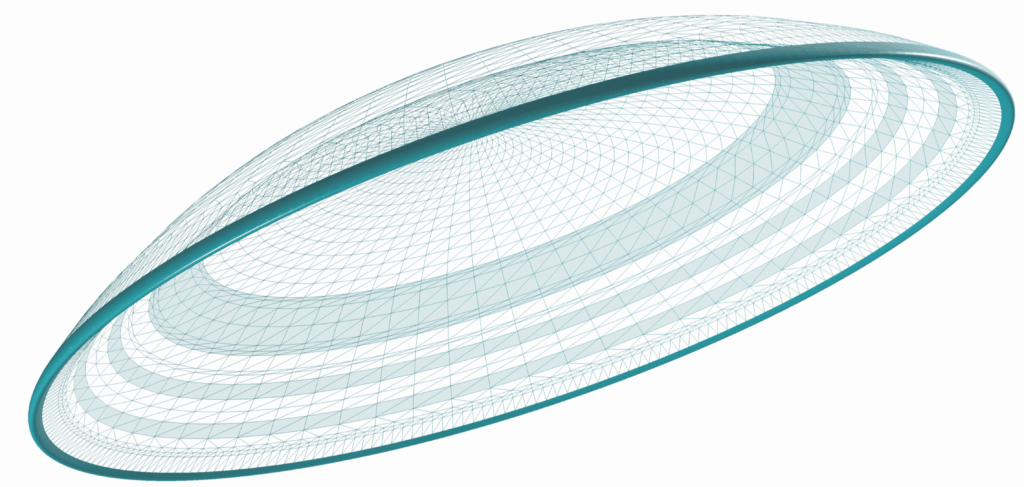
A unique 3‑Reservoir
geometry

Latest orthokeratology lens design by Jaume Pauné

The PauneLens™ 3R is the latest design created by Jaume Pauné, a pioneer and now a global reference in myopia control.
Thanks to his continuous commitment to innovation, this new geometry embodies excellence in orthokeratology.
As part of the partnership with Jaume Pauné, LCS manufactures and distributes PauneLens™ lenses under license.

The PauneLens™ 3R features a 3‑Reservoir tear geometry. This unique design optimizes hydrodynamic forces and significantly improves centration, which is the key to therapeutic success. With PauneLens™ 3R, orthokeratology reaches a new scientific standard and paves the way for a more efficient and predictable practice.

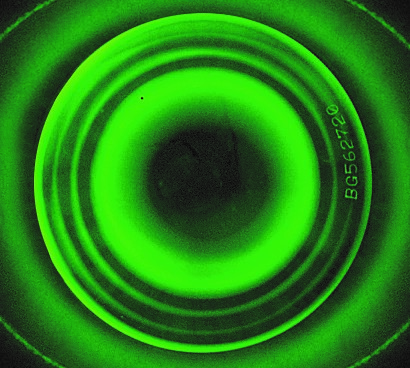
A unique fluorescein image

The analysis of the fluorescein image is straightforward. The ideal fluorescein pattern stands out immediately.

1.  Centrale zone

2. Reverse‑curve zone with the main tear reservoir

3. Peripheral zone with two tear reservoirs

The analysis of peripheral alignment is performed using the support zones.

Fitting: intuitive parameters

The fitting of the PauneLens™ 3R is performed based on the two main areas of the cornea: the center and the periphery.

  • The total diameter is based on the Horizontal Visible Iris Diameter (HVID).
  • The central corneal Keratometry (K) defines the central alignment.
  • The spectacle power (Target Power, TP) is negative for myopes and positive for hyperopes.
  • The Peripheral Curve (PC) defines peripheral alignment, according to corneal eccentricity.
  • The Optical Zone diameter is calculated automatically based on the selected TP or Myopia Control option.
Centrage_maitrise

Controlled centration

Thanks to the hydrodynamic forces generated by the unique and specific tear profile of the third reservoir, the lens remains perfectly centered, ensuring optimal corneal reshaping.

Analyse-simple-60x60px-1

Simple analysis

The analysis of the fluorescein image is simple.

The ideal fluorescein pattern stands out immediately.

Remodelage_Accelere

Accelerated reshaping

Corneal reshaping is fast and efficient, once again thanks to the specific hydrodynamic forces generated by the 3‑Reservoir design.

Confort_optimal

Optimal comfort

Comfort is ensured thanks to the limited mobility of the lens. A Tangible HYDRA‑PEG treatment is available upon request.

Vision_Performante

High‑performance vision

Treatment efficiency is maximized, ensuring an optimal and stable visual outcome.

securite

Security

Highly permeable materials ensure safe overnight wear.

Logo_PauneLens_3R_bleu

Who is it for?

Lentille de nuit

Free yourself from your glasses during the day, by correcting your myopia at night!

Orthokeratology is a fully reversible method of compensating for myopia and myopic control. The lenses are worn overnight to remodel the curvature of the cornea. They are removed in the morning, allowing clear vision without correction during the day.

Who is it for?

Children and teenagers : AMC Kids

Adults : AOK

Why control myopia?

An increase of one diopter in myopia increases the risk of retinal complications by 40% over the course of a lifetime. Orthokeratology lenses are an ideal ally in the fight against ocular pathologies in the highly myopic.

  • Lim R, Mitchell P, Cumming RG. Refractive Associations with Cataract: the Blue Mountains Eye Study. Invest Ophthalmol Vis Sci 1999;40:3021-6.
  • Mitchell P, Hourihan F, Sandbach J, Wang JJ. The relationship between glaucoma and myopia: the Blue Mountains Eye Study. Ophthalmol 1999;106:2010-5. The Eye Disease Case-Control Study Group. Risk Factors for Idiopathic Rhegmatogenous Retinal Detachment. Am J Epidemiol 1993;137:749-57.
  • Li X. Incidence and epidemiological characteristics of rhegmatogenous retinal detachment in Beijing, China. Ophthalmol 2003;110:2413-7. Via Clinical Myopia Profile
  • Prevalence of macular complications related to myopia – Results of a multicenter evaluation of myopic patients in eye clinics in France. Nicolas Leveziel,1,2,3,4,5 Simon Marillet,2,6 Quentin Dufour,1,2 Bentaleb,7 Francois Pelen,7 Pierre Ingrand4,6 and Rupert Bourne. Acta Ophtalmol. 2020: 98: e245-e251

range

Next‑generation Ortho‑K lens

Material : Dk 200 (orange or blue)
(Dk High available)

Wear : Night

Care :
LCS Perox+ or Cleadew GP + Cleadew CareSolution

Myopia Control

Material : Dk 200 (orange and blue)

Wear : Night

Care :
Hydrogen peroxide solution + LCS Clean
Or RGP Multipurpose solution + Enzymatic tablets (for a deaper disinfection)

Classical orthokeratology

Material : Dk 200 (orange or blue)

Wear : Night

Care :
Hydrogen peroxide solution + LCS Clean
Or RGP Multipurpose solution + Enzymatic tablets (for a deaper disinfection)

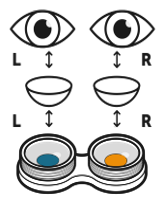
To differentiate orthokeratology lenses, the right lens is tinted orange by default and the left lens blue. However, you can invert these colours to suit the patient’s preference.